
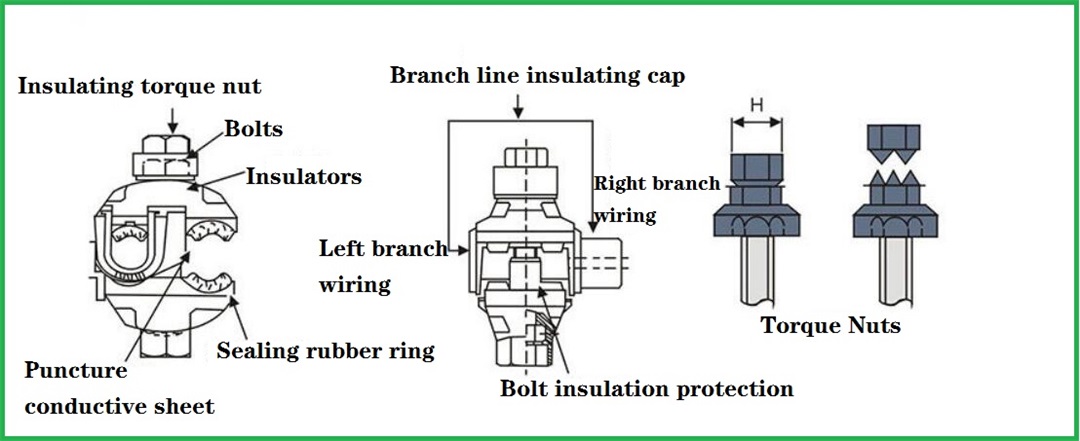
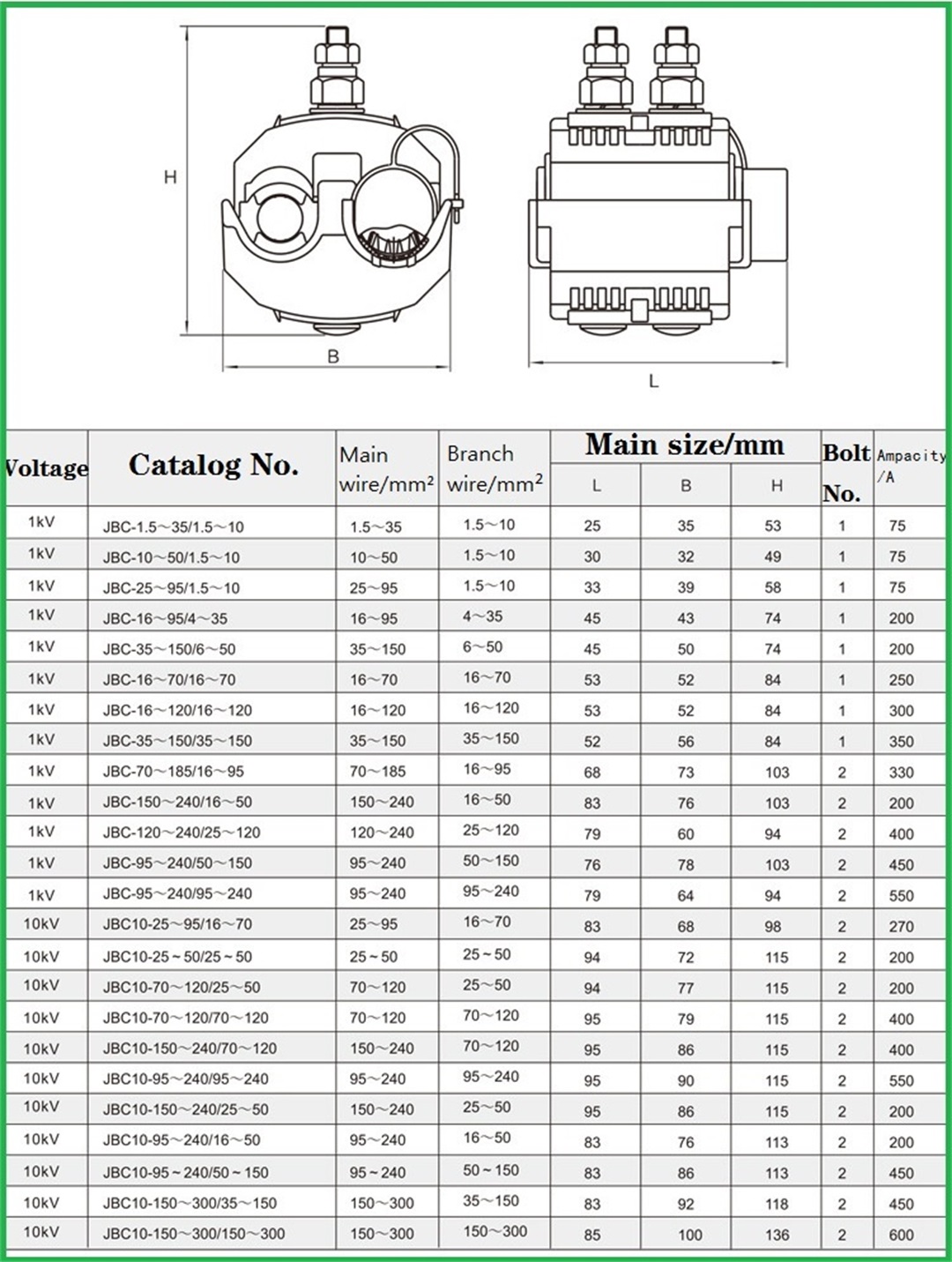
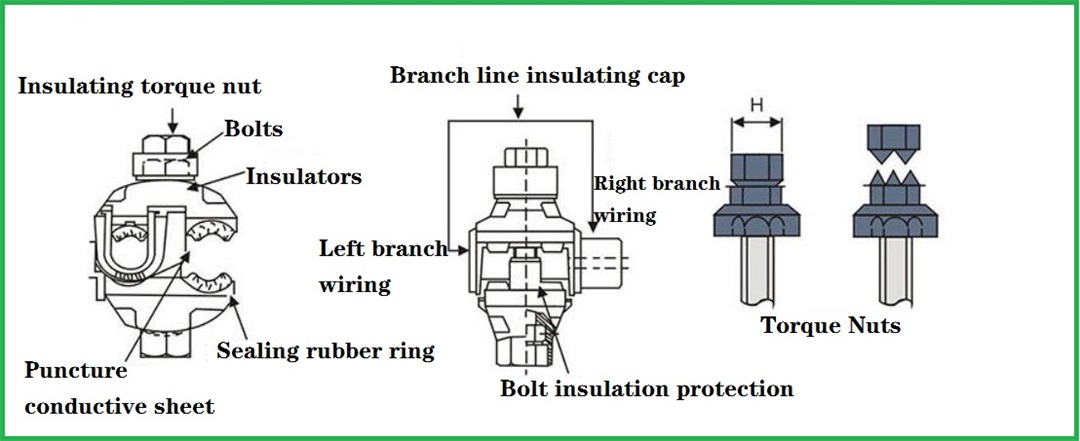
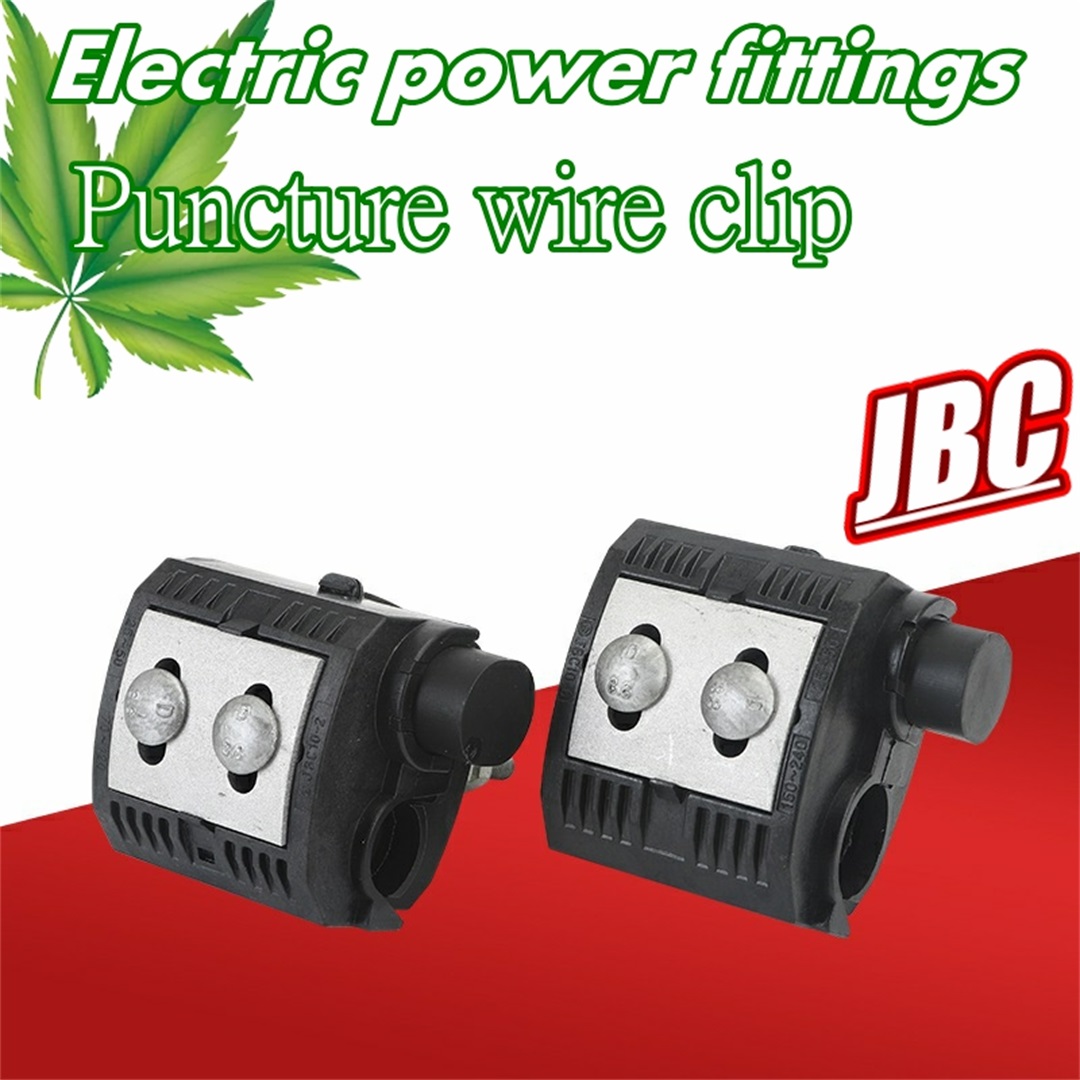
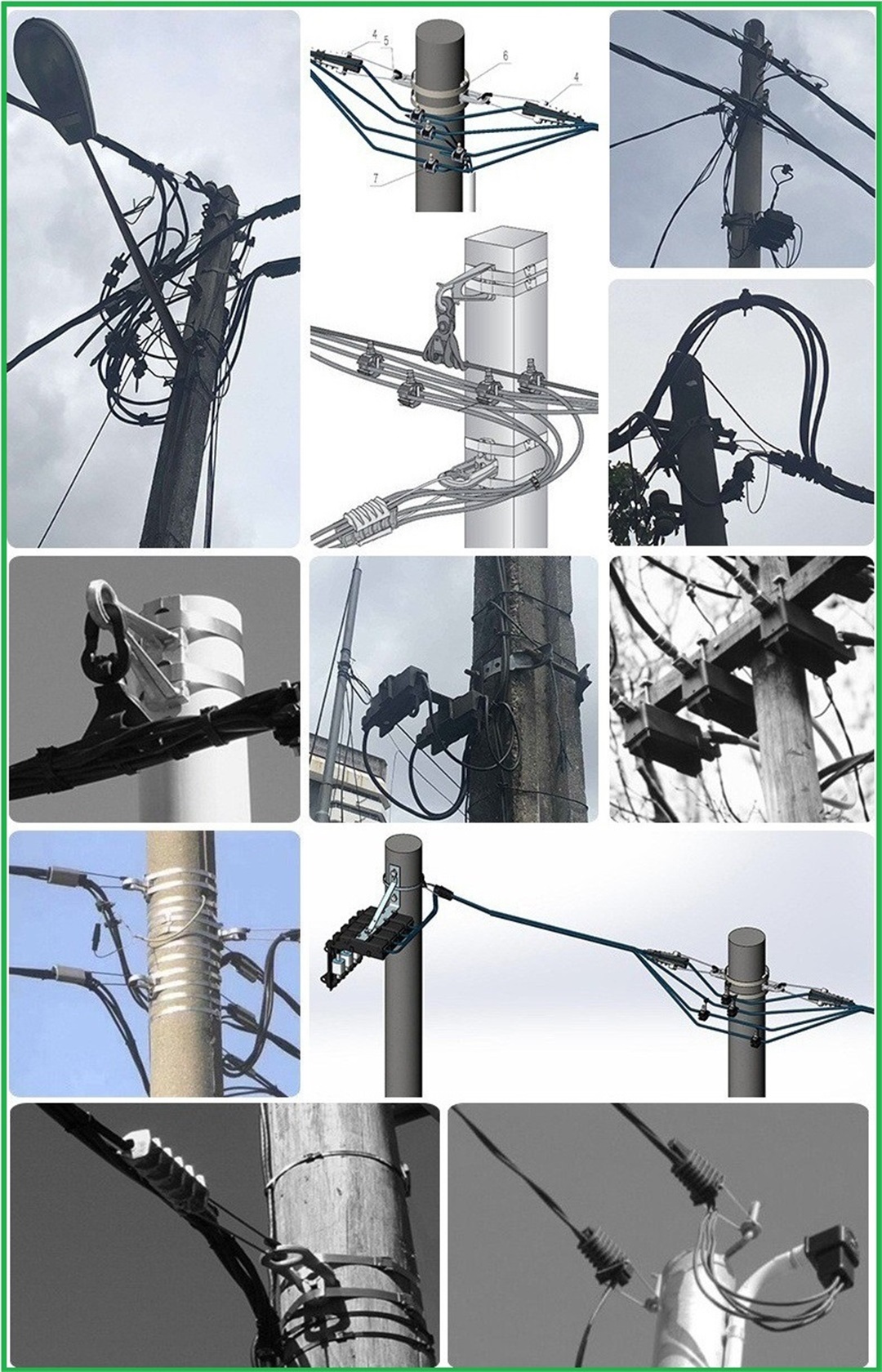
 Features: 1. The puncture structure is simple to install, and the insulated wire does not need to be peeled; 2. Torque nut, constant puncture pressure, ensure good electrical connection without damaging the wire, 3. Self-sealing structure, moisture-proof, waterproof, anti-corrosion, prolong the service life of insulated wires and clips 4. Using special contact blade, suitable for copper (aluminum) butt and copper-aluminum transition 5. The electrical contact resistance is small, and the contact resistance is less than 1.1 times the resistance of the equal-length branch wire, in line with the DL/T765.1-2001 standard 6. Special insulating shell, resistant to light and environmental aging, dielectric strength> 12KV 7. Curved surface design, suitable for the same (different) diameter wire connection, wide connection range (0.75mm2-400mm2) Advantage: 1. Easy installation: the cable branch can be made without stripping the insulation of the cable, and the joint is completely insulated. There is no need to cut off the main cable, and branches can be made at any position of the cable. Easy and reliable installation, only need to use a socket wrench, it can be installed live. 2. Safe to use: The joint is resistant to twisting, shockproof, waterproof, flame retardant, anti-galvanic corrosion and aging, and requires no maintenance. Has been used successfully for over 30 years. 3. Cost saving: The installation space is extremely small, saving bridge and civil construction costs. For applications in buildings, there is no need for terminal boxes, distribution boxes, and cable return lines, saving cable investment. The cost of cable + piercing clip is lower than other power supply systems, only about 40% of the plug-in busbar, and about 60% of the prefabricated branch cable.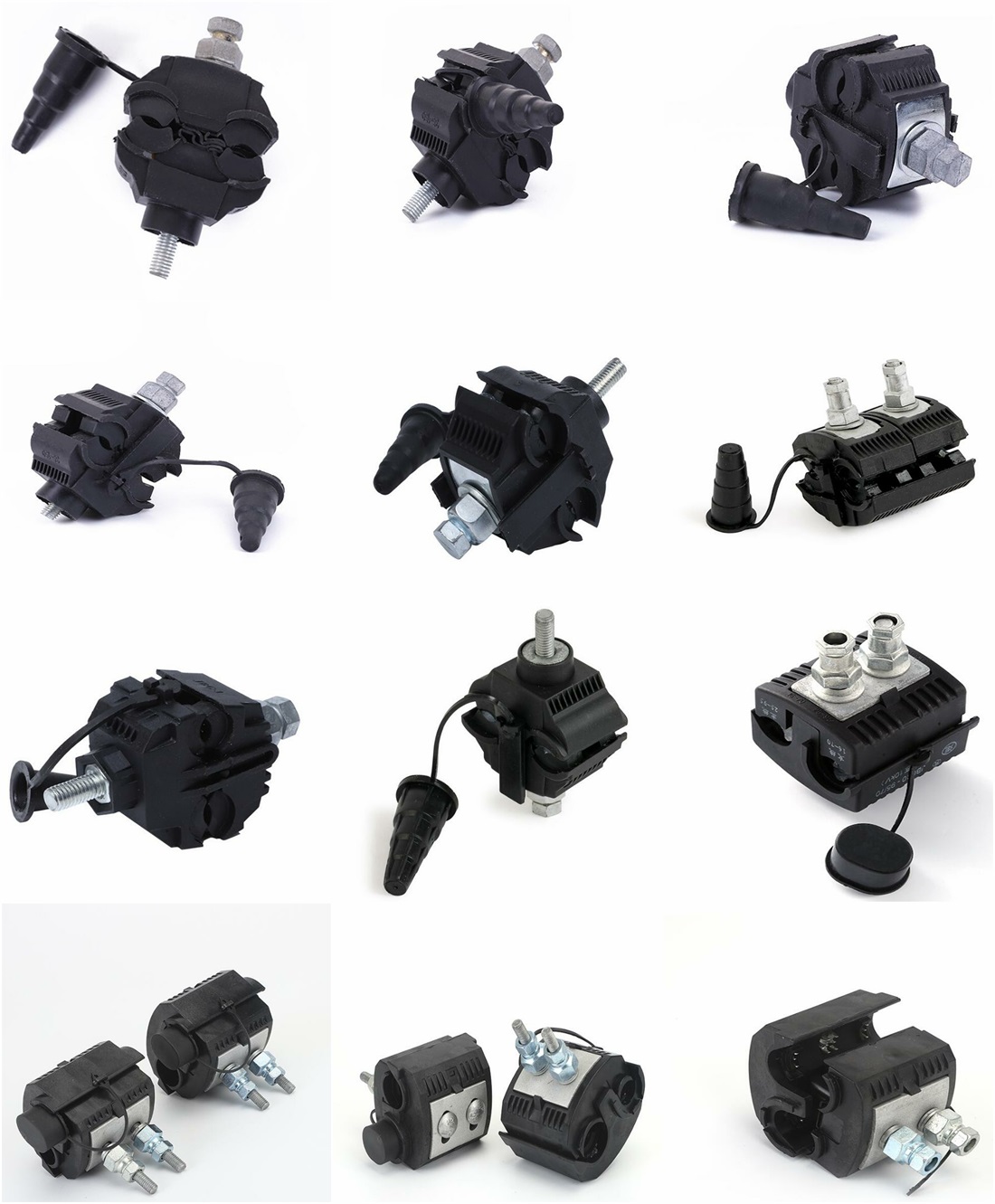



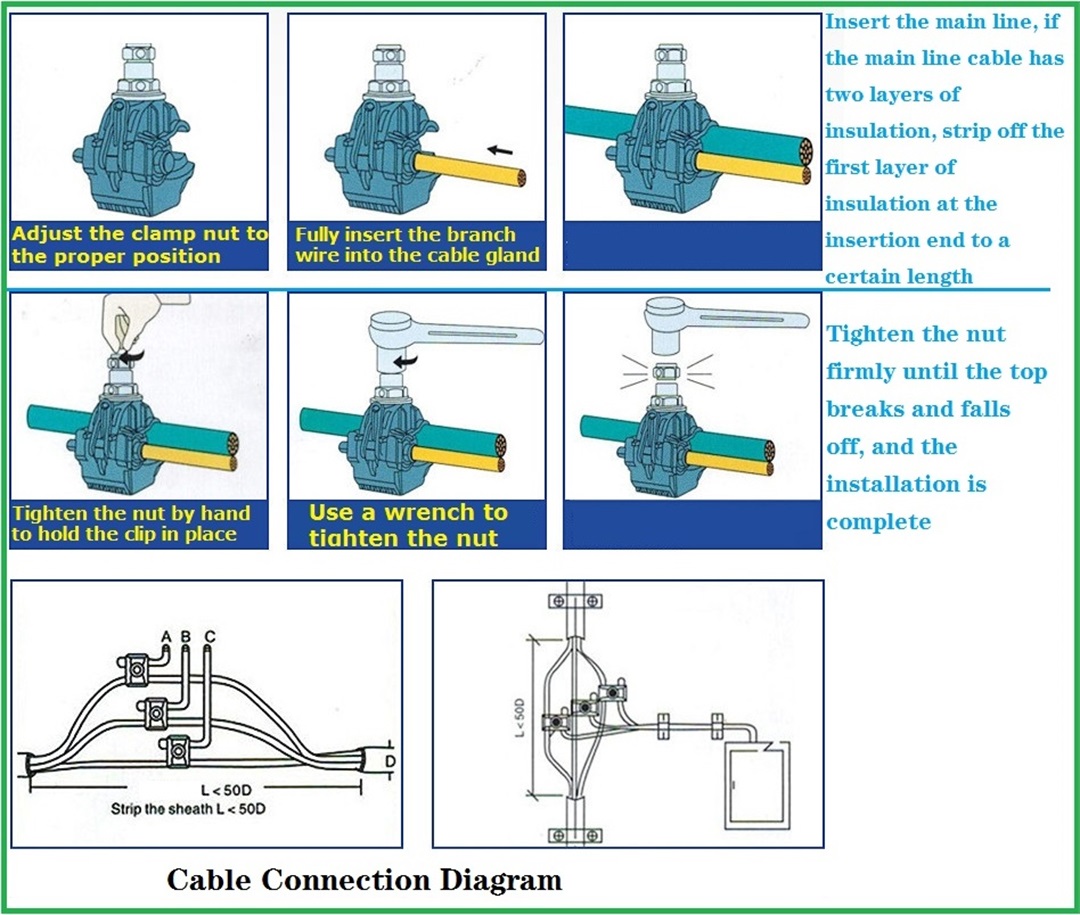
 Installation of single screw insulation piercing clip: 1. Adjust the puncture wire clamp nut to the appropriate position, and completely insert the branch wire into the branch wire cap sleeve. 2. Insert the main line. If the main line has two layers of insulation, strip off a certain length of outer insulation at the connection position. 3. Put the main/branch line in the proper position and keep it parallel, first tighten the nut by hand, and fix the clamp. 4. Tighten the nut evenly with a socket wrench corresponding to the size until the top breaks and falls off, and the installation is complete. Installation of twin-screw insulation piercing clips: 1. Unscrew the wire clamp and insert the main wire into the main wire groove. Do not twist the main wire and the knife ruler. Pay attention to whether the wire diameter range corresponds to this wire clip. 2. Put the branch wire into the branch wire slot. Note the same as above. 3. Tighten with a socket wrench. Disable open-end wrenches. 4. Note that the two nuts should be screwed down in sequence. 5. When tightened to a certain strength, the constant torque nut is broken, and the installation is completed