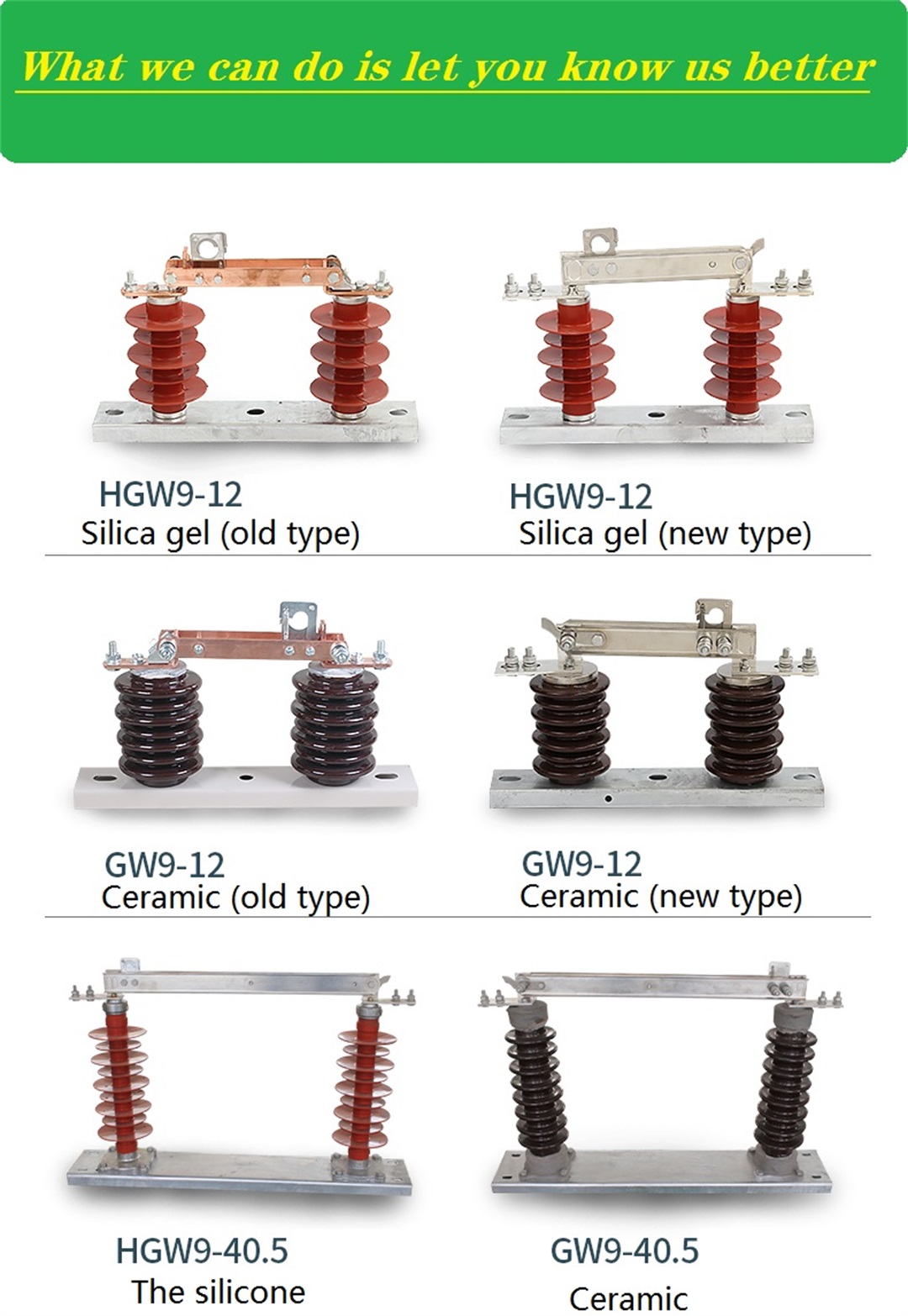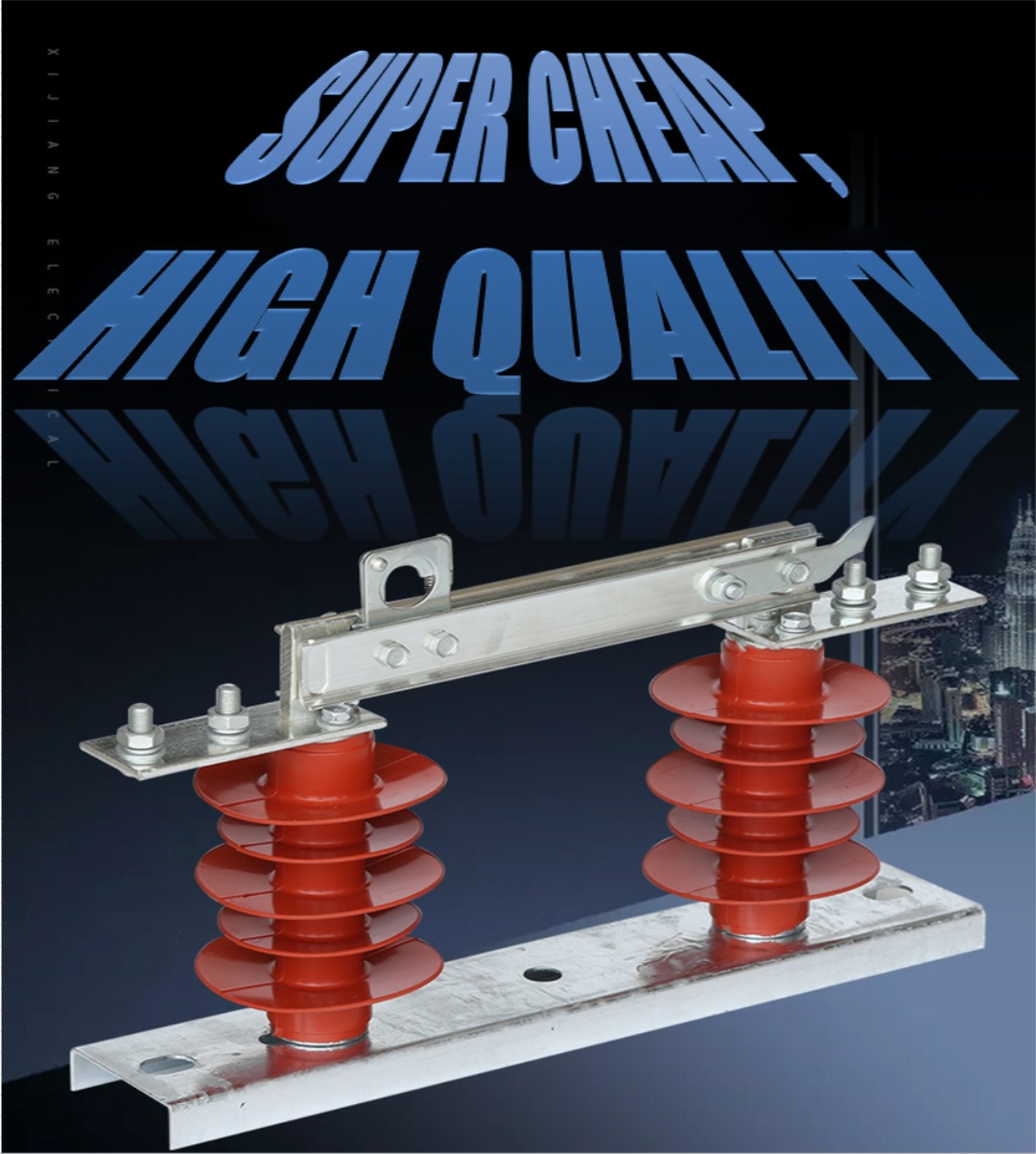
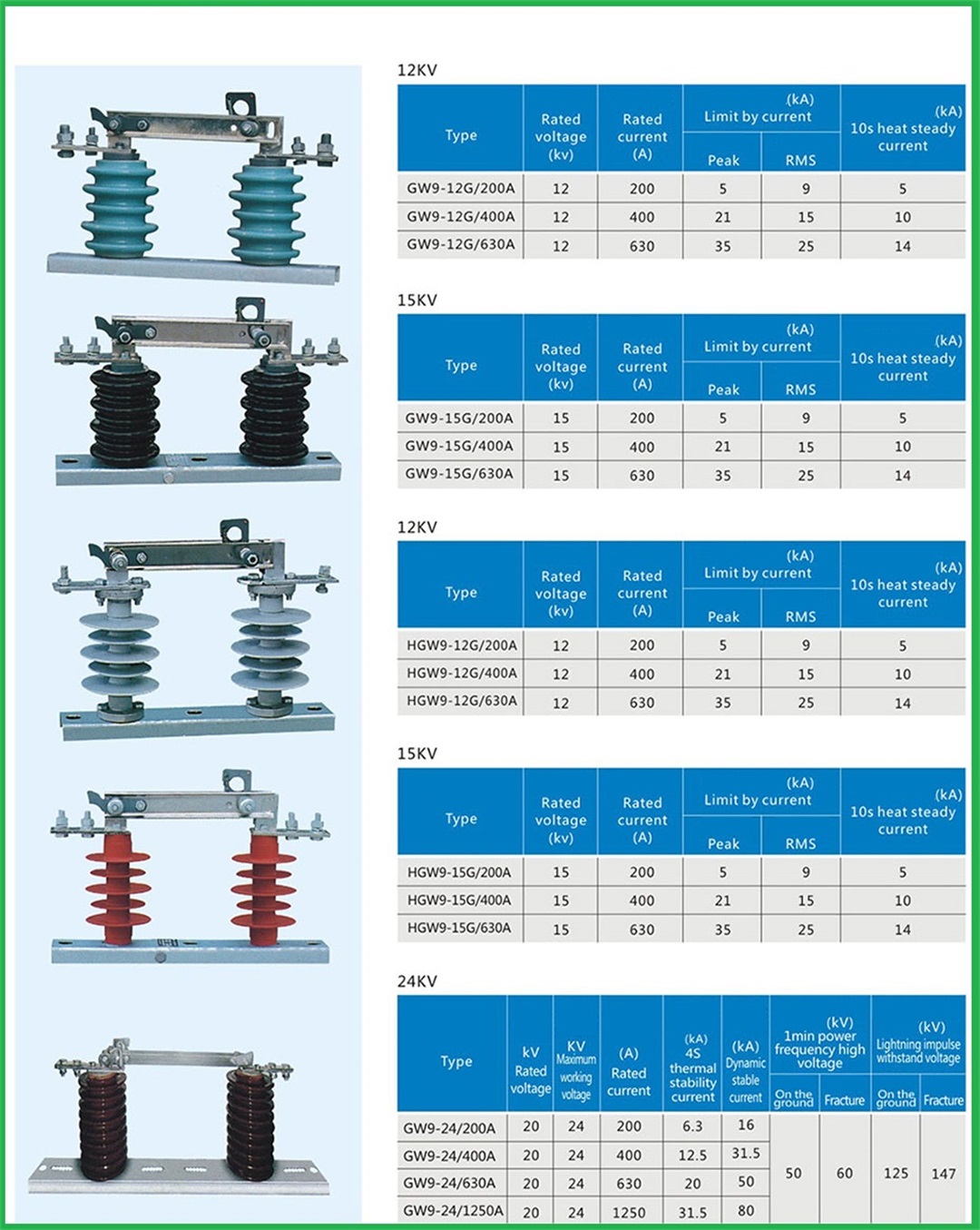
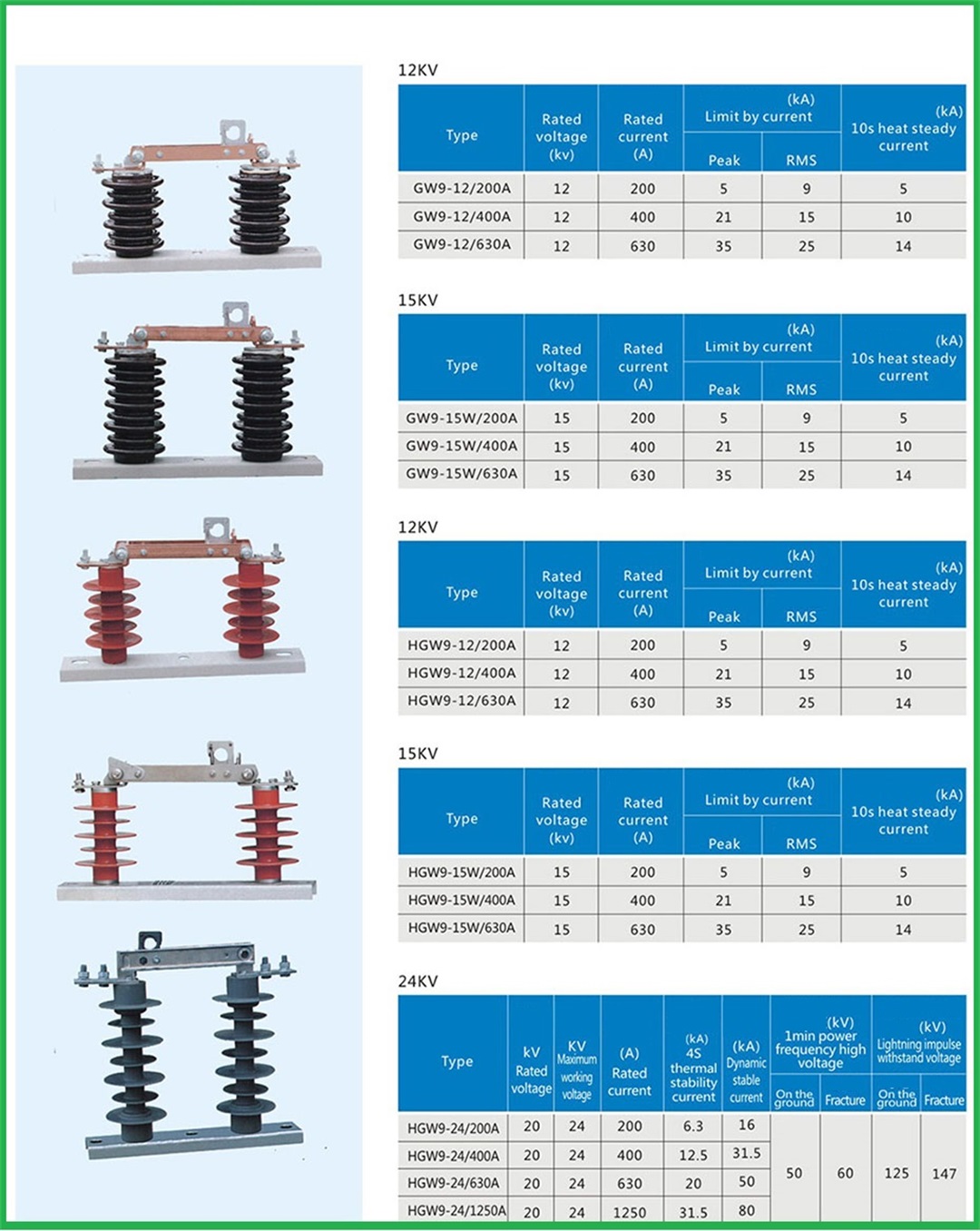
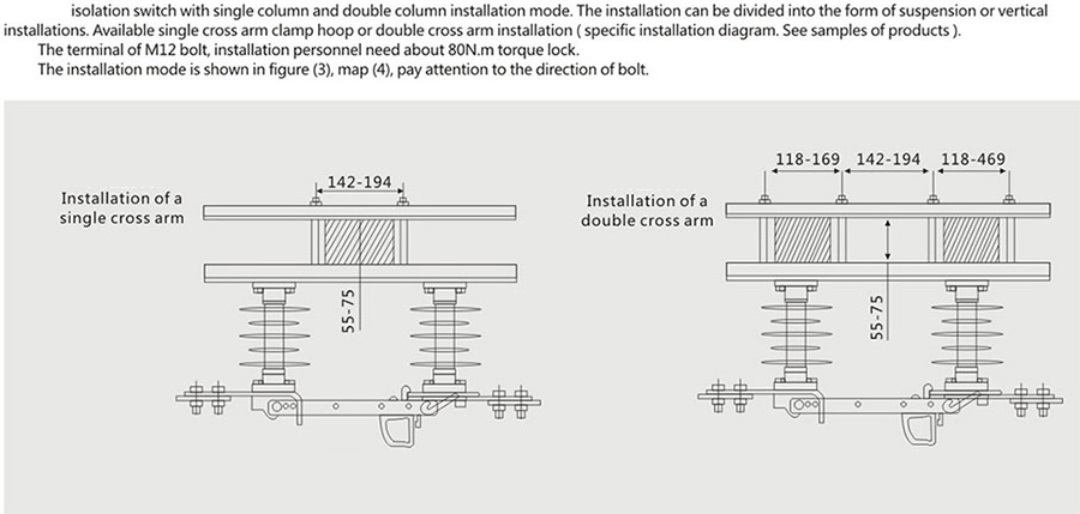
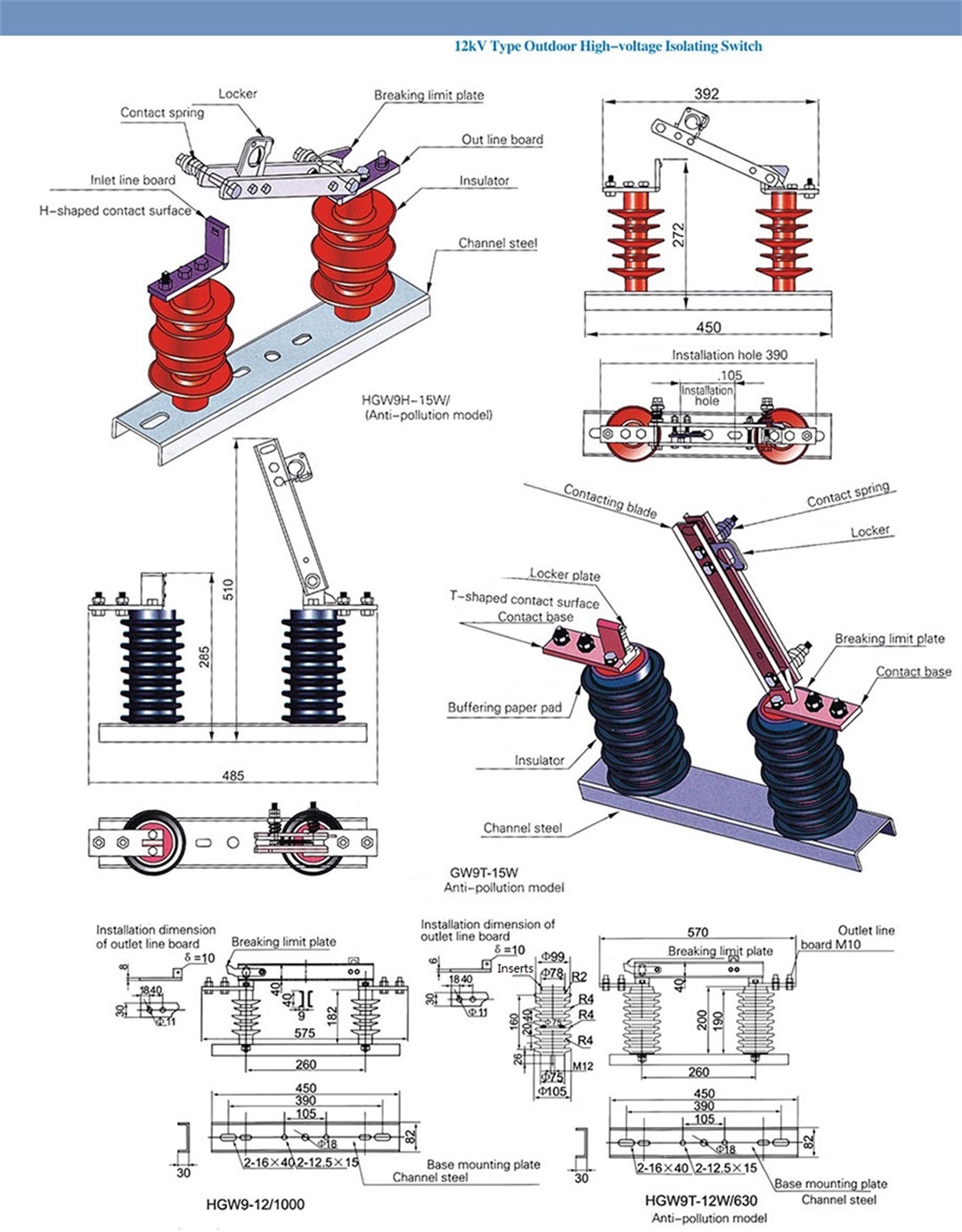
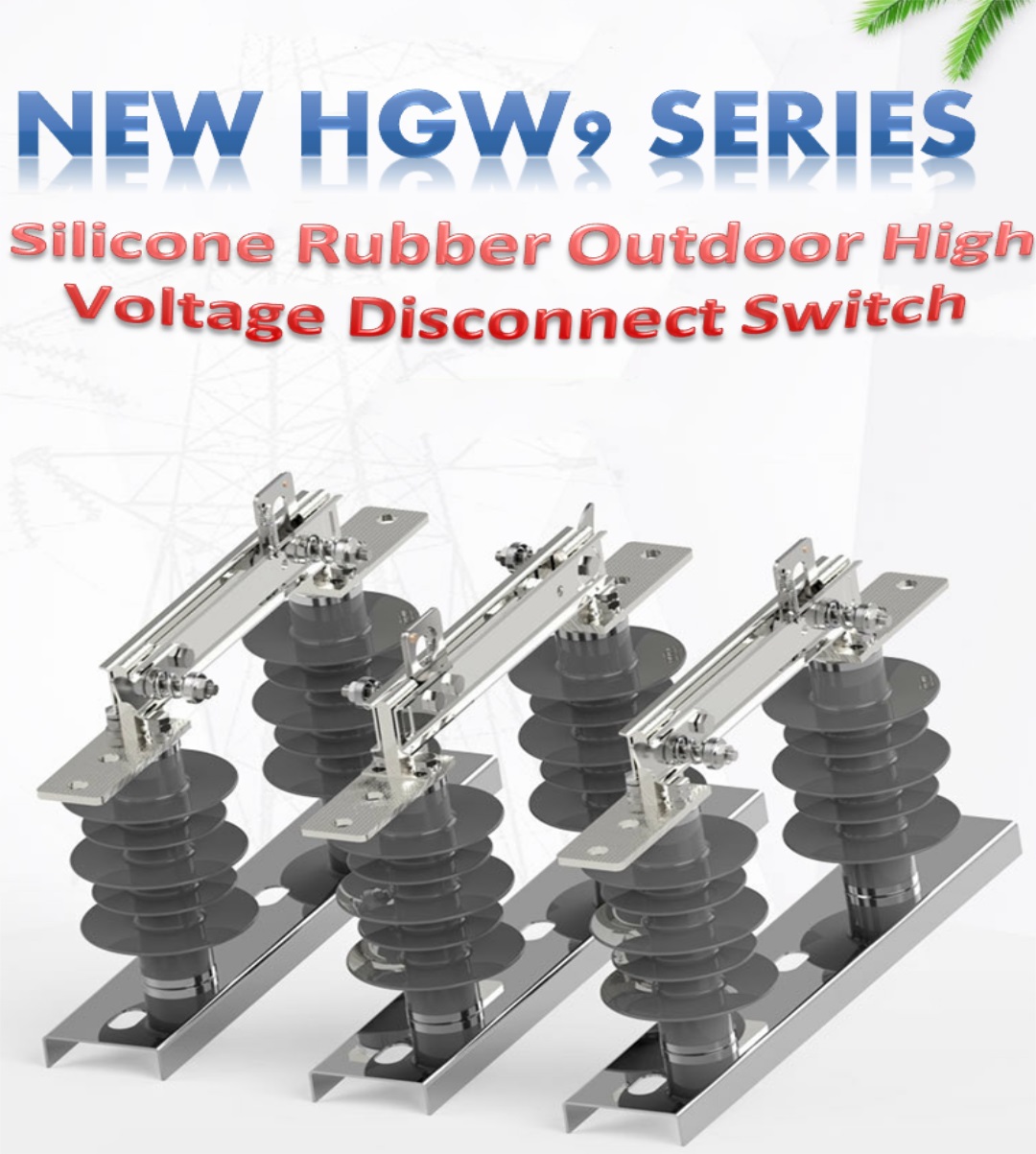
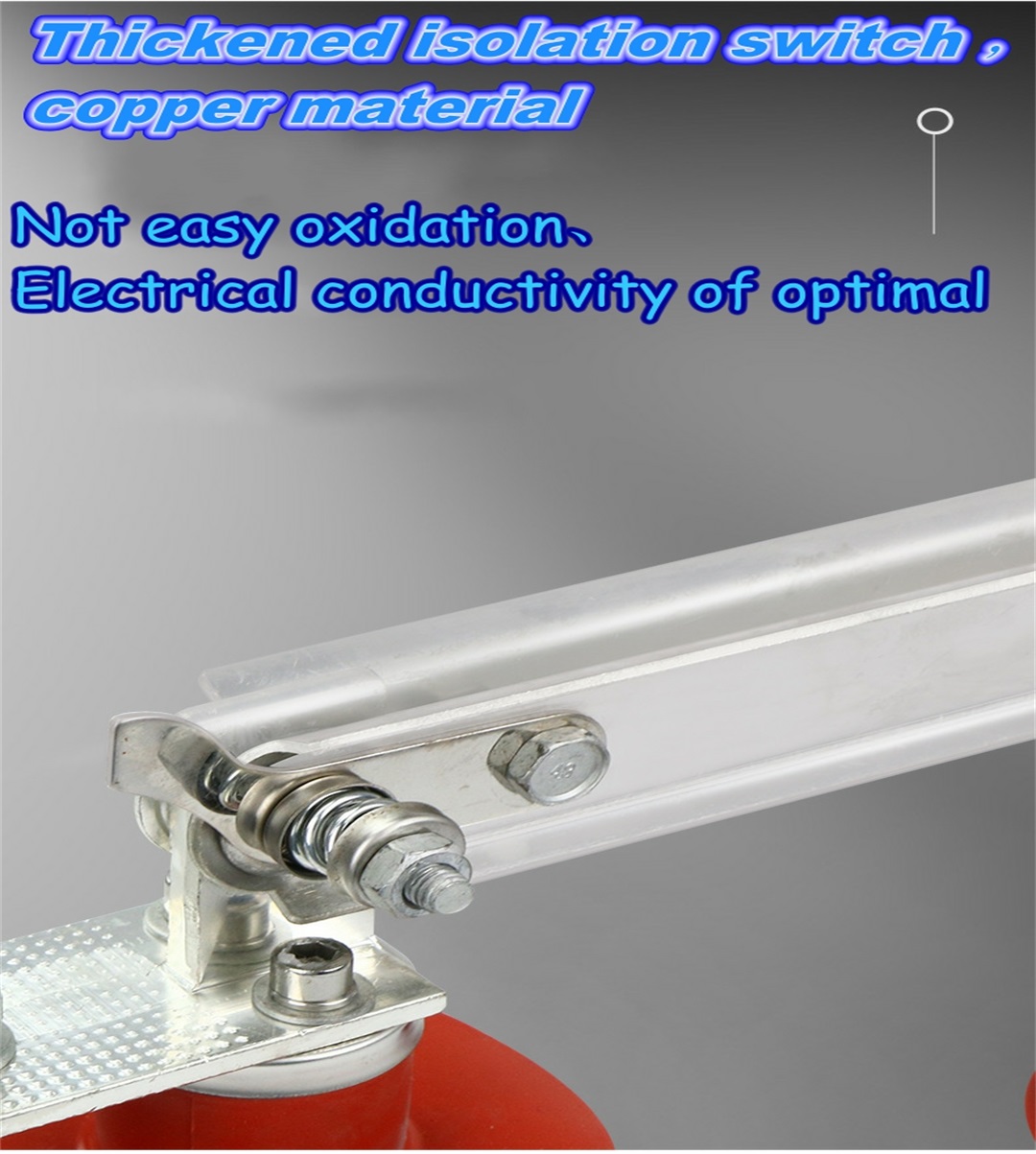
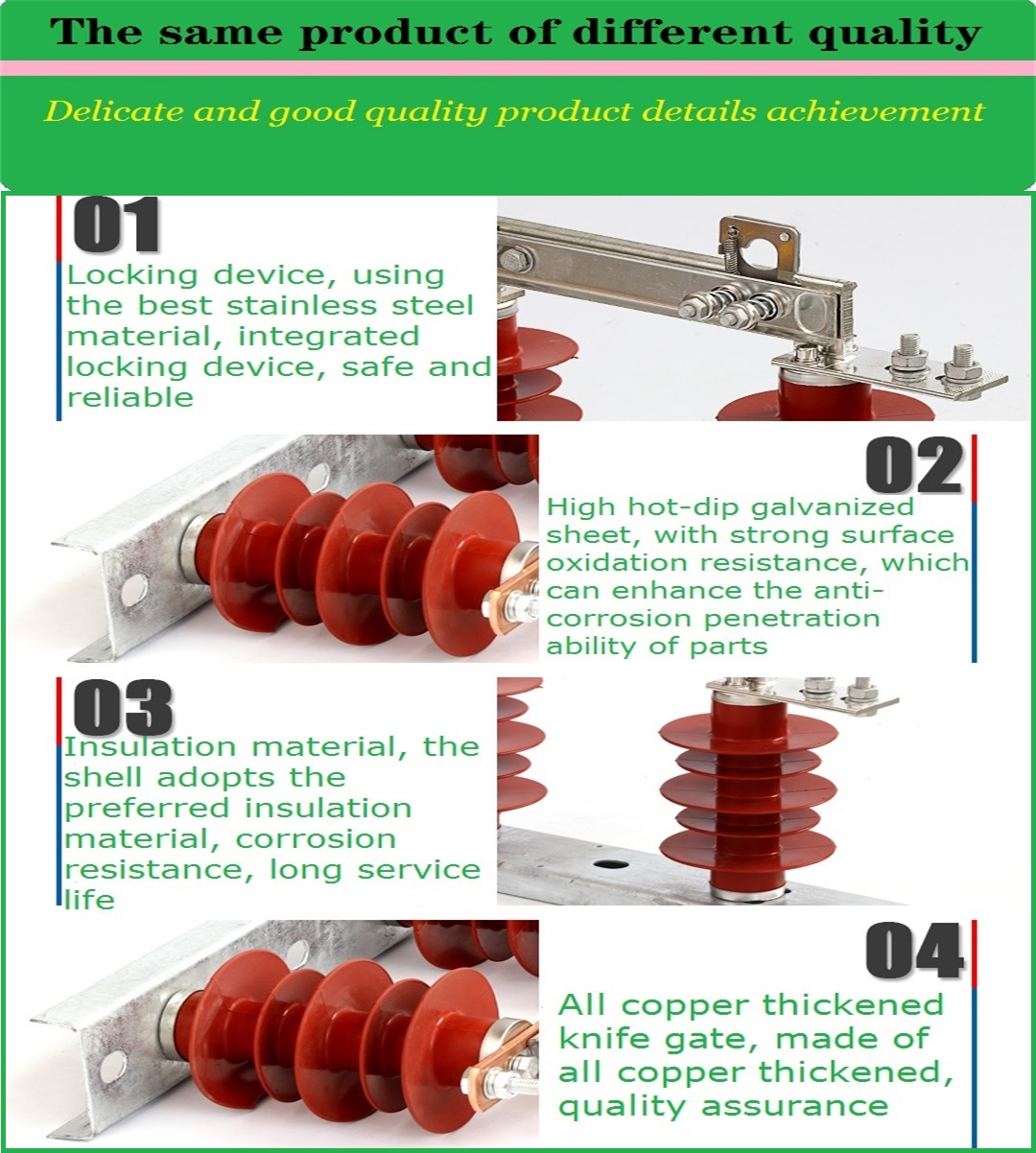
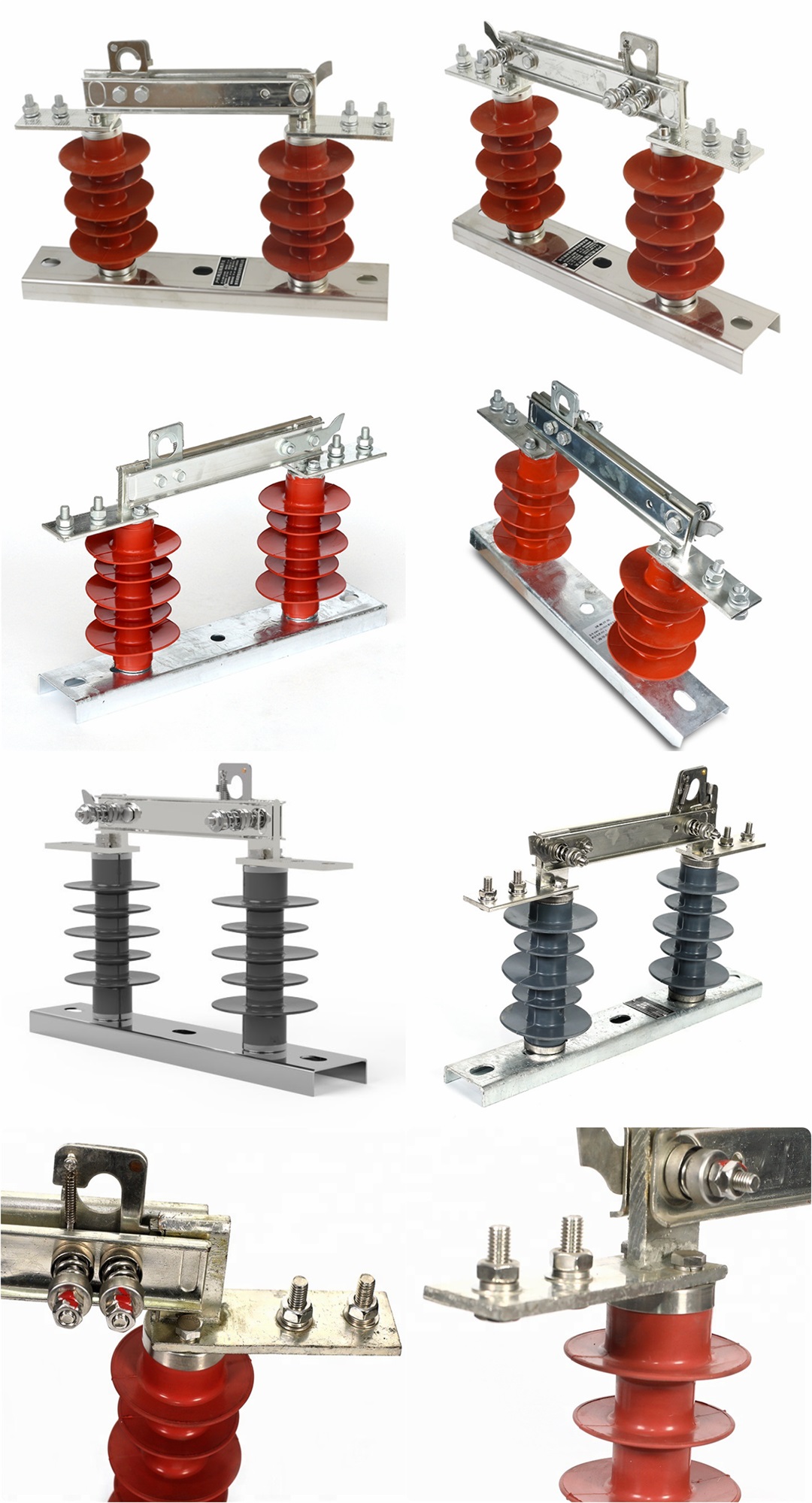
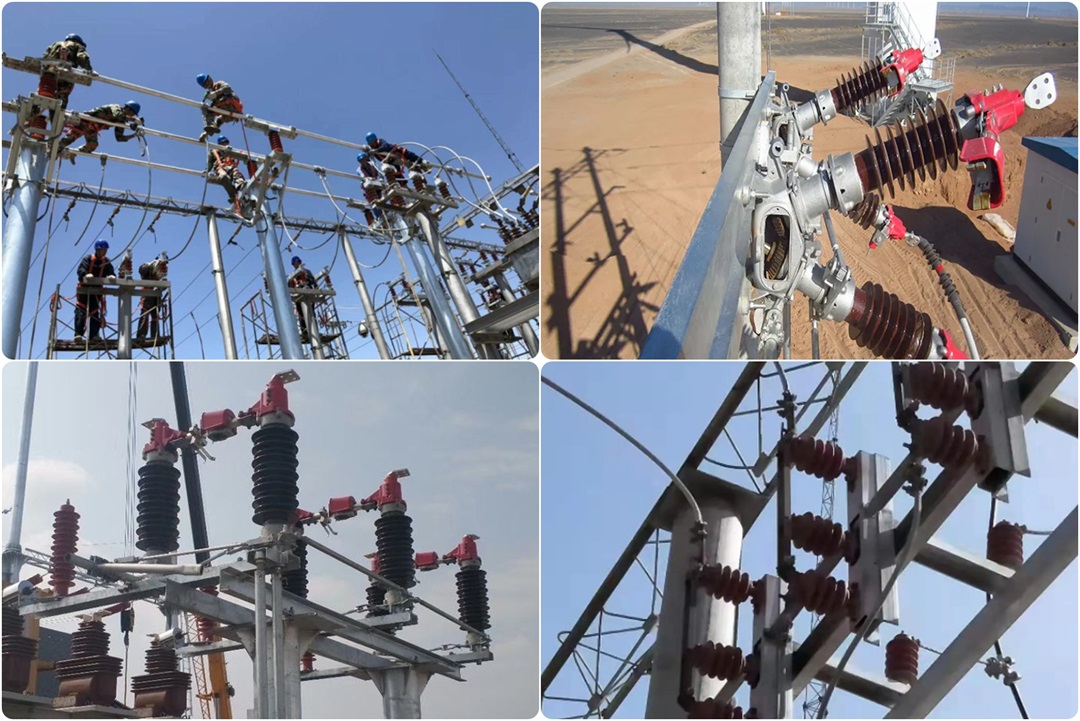
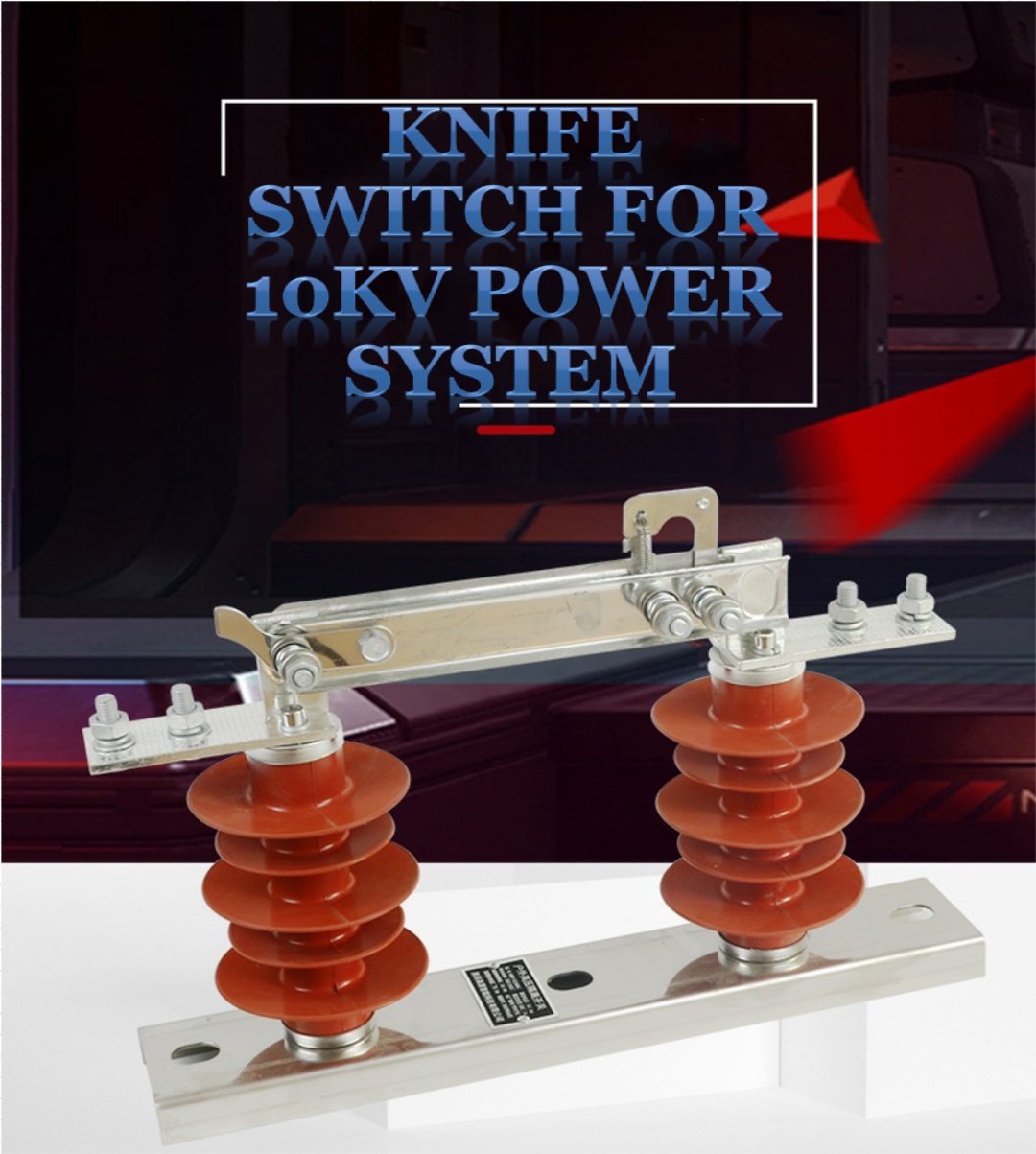
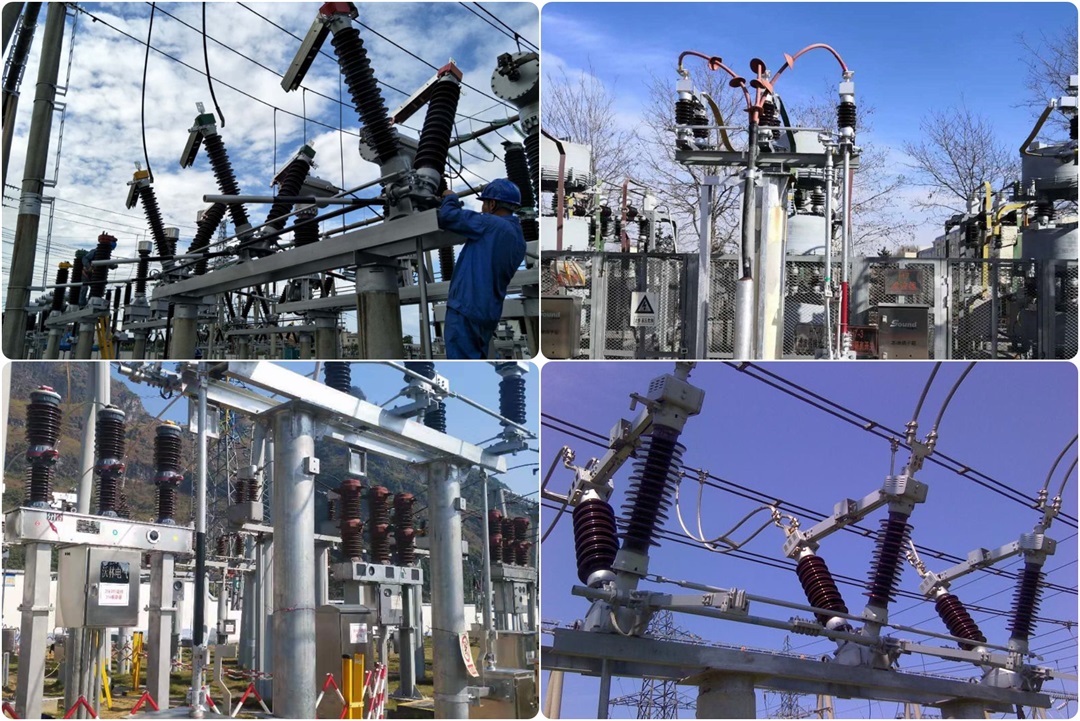
 1. This isolating switch is a single-phase structure, and each phase is composed of a base, a ceramic insulating pillar, an inlet and outlet contact, a knife board and other parts. 2. There are compression springs on both sides of the knife plate to adjust the contact pressure, and the upper end is equipped with a fixed pull buckle and a self-locking device connected to it for opening and closing of the insulated hook. 3. This isolating switch is generally inverted, and it can also be installed vertically or inclined. The disconnect switch opens and closes by using an insulated hook rod, and the insulated hook rod buckles the disconnect switch, pulling the hook to the opening direction. After unlocking the self-locking device, the conductive plate connected to it will rotate to realize the opening action. When closing, the insulating hook rod against the hook of the disconnect switch drives the shaft to rotate, so that the connected conductive plate rotates to the closing position and the disconnect switch closes. This type of disconnect switch can be installed on pillars, walls, ceilings, horizontal frames or metal frames, and can also be installed vertically or obliquely, but must assure that the contact knife is turned downward when it is opened.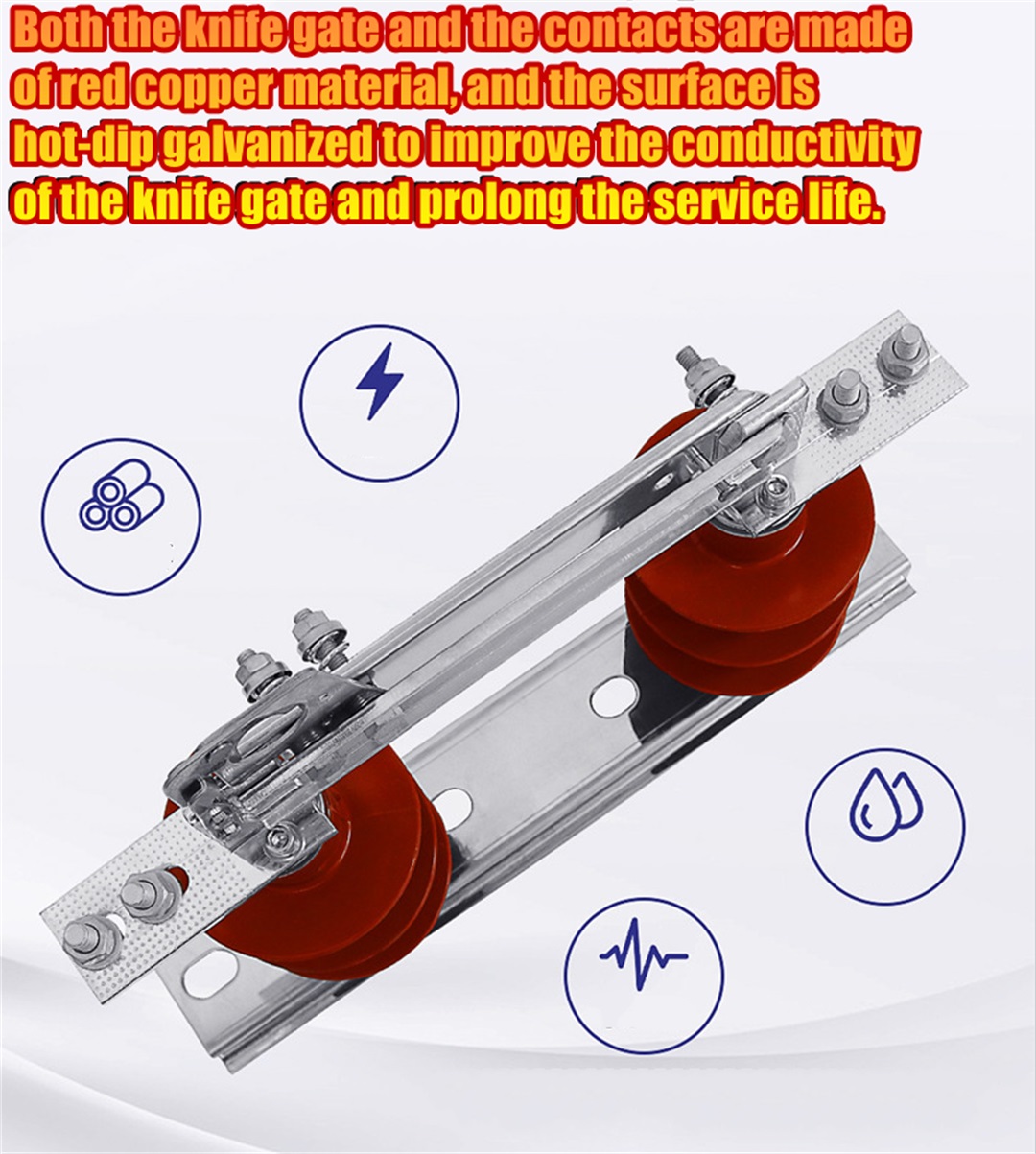
 (1) Altitude: not more than 1500m (2) Maximum wind speed: no more than 35m/s (3) Ambient temperature: -40℃~+40℃ (4) The thickness of ice coating is not more than: 10mm (5) Earthquake intensity: 8 (6) Pollution level: Grade IV